

How Walmart saved 1 billion gallons of water in two years
By Rex Tilton on January 26, 2012 11 comments
Fresh water is a luxury in much of the world. Today, only about 2.5 percent of the water on the planet is fresh – and with our world population on pace to reach 9 billion by 2050 – protecting our water resources is more important than ever.
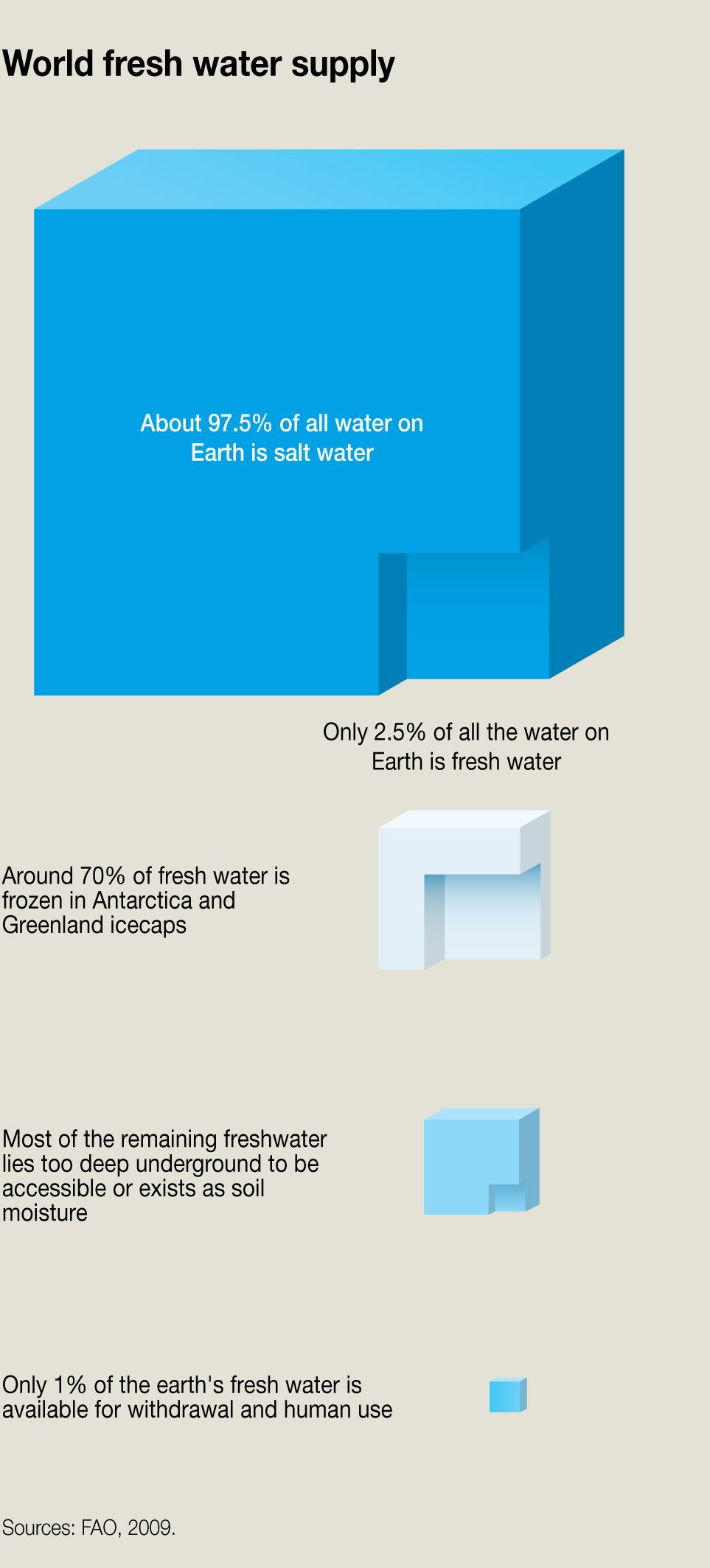
Credit: UNEP/GRID-Arendal
That’s why we’ve spent the last few years examining poultry factories and their use of water. We made changes in plants and with our suppliers that range from the simple to the complex – and they’ve made a big difference.
We have saved more than one billion gallons of water in the past two years in poultry plants that serve Walmart. That’s equal to the amount of water New York City residents consume in about six weeks. We’ve done it by encouraging recycled water – working with the USDA to meet high standards. We’ve done it by recommending a change in nozzles, which lower water flow but also increase pressure.
But mostly we’ve done it by listening. Many of our suppliers heard our ideas and said, “No, that won’t work for us, but here’s what we can do.” Together, we devised better solutions and became united in our drive to save water.
In one factory, supervisors even started carrying a water spigot in their pockets to remind them that water is a precious resource. That’s the kind of focus that will ensure our limited resources are respected and available to an ever-growing population. It’s the right thing to do, and we are grateful to have the right partners helping make this happen.

 Loading ...
 Subscribe to The Green Room
1. Dusty Gepner | January 26, 2012 at 4:36 pm
What are some of the best water-conservation innovations that you’ve seen at work in factories?Using rain water to flush toilets, water landscapes.roof gardens to filter the water and keep the buildings cooler,.Wetlands to filter parking lot run off. then using the filtered water to water landscapes.rain water for water features and foutains
2. Rhonda Davis | February 2, 2012 at 7:33 pm
The best water-conservation methods I have seen have been when companies or individuals re-using rainwater. Rainwater can filtered and re-used. In China they have taken sewage and set plants that naturally clean water to grow into the tanks that house the sewage. The result is clean clear re-usable water. Recycling water is the best way and it leads to water conservation.
3. Rhonda Davis | February 2, 2012 at 7:36 pm
There is a method where plants that naturally clean water to grow into the tanks that house sewage(I believe they do it in China). The result is clean clear re-usable water. Recycling water is the best way and it leads to water conservation.
4. Doug DaMan | July 23, 2012 at 4:00 pm
If it’s brown, flush it down, butIf it’s yellow, let it mellow (for a while at least).
5. Britt Storkson | July 24, 2012 at 9:16 am
Are you really serious about saving water? The answer is more political than anything else. Stop giving water (and the power to pump it) away to politically connected individuals and corporations. Water should be sold by open competitive bid like any other commodity. Do we give away oil, lumber, gold, silver, etc.? We shouldn’t give away water either.You would be amazed how much less of anything people will use when it costs them something to use it.
6. Jill Brooks | August 4, 2012 at 8:37 am
You are SO right! Not very many people get this, and those who do are too politically connected to give a flip. Nothing much will EVER change ANYwhere until enough people understand and are willing to put forth the effort to band together and fight against the powerful political groups in charge.
7. countryboy | July 25, 2012 at 8:56 am
Where are they storing all this water they saved? What do they plan to do with it?
8. Leland Yeoman | July 28, 2012 at 11:30 am
I have a vacation home in Desert Hot Springs, California (10 Mi North of Palm Springs) . SECOSYS, a Southern California water management controls developer, has made my house a test site for a product it has developed. This devise clips on a convential water meter and consists of a computer, monitor and a WIFI conection to the internet. It can detect even the smallest deveation from the peramators of water usage, set as normal by me on the device. It will also either shut off the water or leave it on and report the problem to me at my permanent home 200 miles away via the internet. Yesterday, a sprinkler head broke and the volume went up immensely and a large section of my landscapeing was not receiving water. The temperature high is 108 degrees today and it would have been a month before my next return. My water bill would have been sky high and i would have lost some valuable landscapeing. A device set to cost a few hundred dollars saved more than it’s cost. The next test site is set to be a hundred plus home project in Rancho Marirage, 20 mi from here. I hope these devises will be available for the general public soon, as it will save much water and expense for home owners. Leland Yeoman
9. Neil | August 5, 2012 at 3:08 am
Simple question….how much water is on earth compared to 200 million years ago……..It’s the same….not that big of a deal……
10. JK | August 16, 2012 at 10:58 am
Neil – substitute ‘much water is’ with ‘many people are’ in your simple question. It’s not the same at all, and therein lies the complexity of this issue.
11. Ron Bair | August 16, 2012 at 8:18 am
bairsmithDo we all need two houses? and the green lawns that need to be watered?