

Women in Factories Training Program to empower more than 60,000 workers
By Sridevi Kalavakolanu on April 5, 2012 Leave a comment
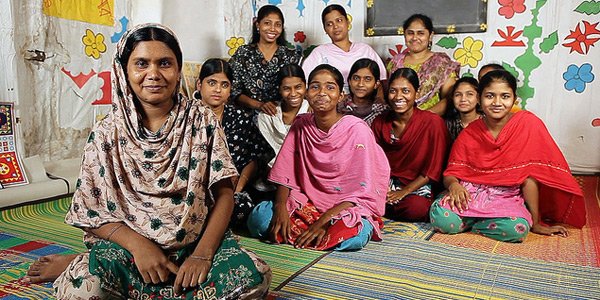
Anju Ara, 27, moved from her home in Pabna, Bangladesh, to the capital of Dhaka to work in a garment factory with a dream to overcome poverty and have a better life.
Women make up the majority of the workforce in manufacturing industries around the world and help to produce many of the products in our stores. In Central America, India, China and Bangladesh, women factory workers are often the first generation to take a job outside of their homes and become a part of the formal workforce.
Many of them have also migrated from rural areas to cities in search of opportunity, and they commute long hours to get to work every day under difficult circumstances. They face shortages of basic amenities such as drinking water and electricity and have to contend with poor public health care and transportation. They mostly want to be able provide a better life for their children so they do not struggle as they have.
I spent years working in the United States with companies to develop social compliance programs as well as programs that promote greater opportunity for women workers in factories.
Eleven years ago, I brought that commitment back to India, where I was born and raised. Today, I am a Director of ethical sourcing in the Indian Subcontinent, Middle East, Africa and Europe. Over the years, I have seen support for factory workers grow, along with an increasing focus on what happens within the factory.
But what about what happens outside of the factory, especially for women? How do we move beyond the factory walls and ensure that women are not only able to make ends meet and provide for their families but are also able to have fulfilling lives and develop their potential to grow?
We’ve spent a lot of time talking about that at Walmart and with leading NGOs. Walmart does not own any factories, but we do hold the suppliers who own them to legal and ethical sourcing requirements. We also want to empower factory workers, so our conclusion was that we had to be as broad-based as possible in our approach, and take into account all of the areas where we know women have the potential to grow.
Today, we begin a five-year program to train and empower women in factories that supply products to Walmart. The training is starting right here in India and in Bangladesh. Eventually, we’ll help train more than 60,000 women in 150 factories, including in China and Central America.
Experienced and committed NGOs will run the programs. In India, is it SWASTI and in Bangladesh, it is CARE.
The program will be evaluated by Northwestern University in partnership with DAI and Mission Measurement.
We’re taking the programs into factories that are interested in making the program permanent and have high numbers of female workers. All workers will attend training sessions and will study everything from effective communication, gender sensitivity, self-esteem and health and hygiene. A smaller group of 8,000 high-potential women will be selected for more intense advanced training on leadership and management skills.
For me, this is an opportunity to change lives. Women often never advance beyond the factory floor because of societal barriers, poverty, illiteracy and more.
India is a country of great opportunity and also of great inequality. Our economic growth has been 8 to 9 percent annually over the last few years. At the same time, 30 percent of our population lives below the poverty line (on less than 44 cents a day) and 42 percent of children under 5 are malnourished. The adult literacy rate for men is 82 percent, but for women, only 65 percent.
 A little training makes such a difference for families. So many times, when we ask a factory worker what her dreams are, she will tell you what her hopes are for her children and for her family. Her dreams are always for someone else.
With training, she begins to talk about job growth and plan her next steps. She begins to have more control over her money and use her improved literacy skills to help her children with homework. She will also look you straight in the eye and talk with confidence about the future.
That’s the kind of future I have been working toward since I began this journey. I truly believe that when you train a woman, you do so much more than help an individual – you also help an entire family and you help an entire community. The lessons we will impart can have a lasting impact and change lives.

- Read the full press release here

 Loading ...
 Subscribe to The Green Room